Flu Season 2026/7
Flu season is approaching, and some people can already book their free NHS flu vaccine. Here's everything you need to know about who can get vaccinated this year and what's changed since last autumn.
Confirm your eligibility below and book your vaccine now!
A note to our patients,
When and where is 168 holding clinics this year?
Saturday 3rd October - Locking Parklands
Saturday 10th October - Locking Road
Saturday 17th October - Location TBC
We also plan to hold a mid-week clinic in November, dates TBC.
What's new for autumn 2026?
There are 2 notable changes this year. First, some community pharmacies will be able to offer flu vaccinations to more children. Last year, some community pharmacies offered flu vaccines to 2- and 3- year olds for the first time. From 1 October 2026, some pharmacies can also vaccinate children aged 2 years to less than 18 years who are in clinical risk groups. This runs alongside the existing offer given in schools and GP practices, which starts from 1 September 2026. From 1 December 2026, some pharmacies will also help catch up any school-aged children who missed their vaccination via the schools teams. These changes are designed to help make it easier for families to access the vaccine at a time and place that suits them.
Second, rough sleepers and those using homeless hostels or night-shelters, aged 16 years and over, are now included in the national flu programme for the first time, from 1 October 2026. This follows advice from the Joint Committee on Vaccination and Immunisation (JCVI).
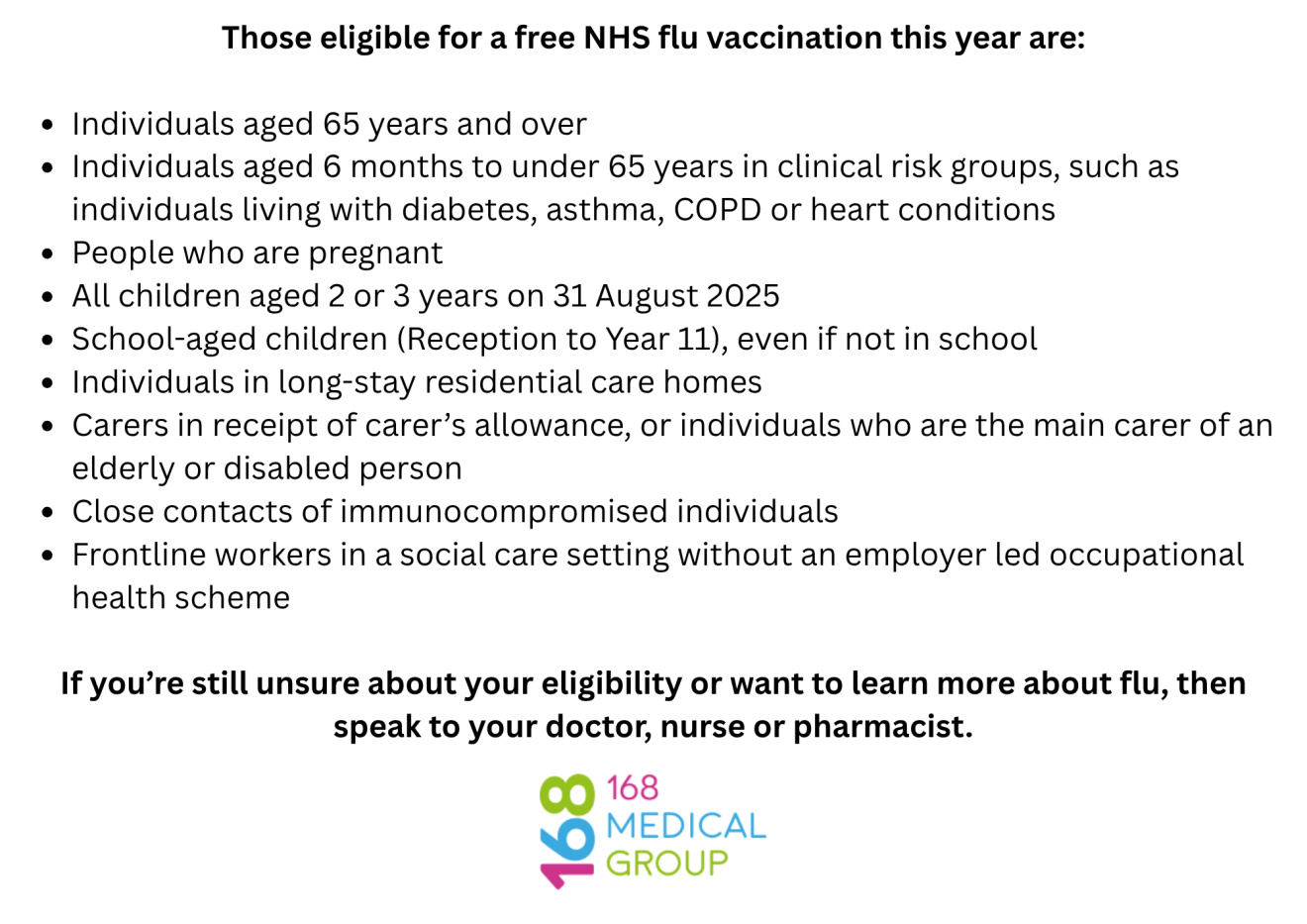
Who is eligible for the flu vaccine this year?
From 1 September 2026, the following groups are eligible. Where ‘clinical risk groups’ are mentioned, these are defined in the Green Book, Influenza Chapter:
- pregnant women
- all children aged 2 or 3 years on 31 August 2026
- primary school and secondary school-aged children, from reception to year 11
- young people aged 17 and over attending a special educational needs (SEN) school who are also in a clinical risk group
- all children in clinical risk groups, from 6 months to less than 18 years
From 1 October 2026, the following groups become eligible:
- everyone aged 65 years and over
- all adults in clinical risk groups, from age 18 to under 65
- residents of long-stay residential care homes
- carers in receipt of carer's allowance, or those who are the main carer of an elderly or disabled person
- close contacts of people who are immunocompromised
- rough sleepers and those using homeless hostels or night shelters aged 16 years and over
- frontline social care workers without access to an employer-led occupational health scheme, including those working in:
- registered residential care or nursing homes
- domiciliary care
- voluntary managed hospices
- personal assistants employed through direct payments or personal health budgets
Why does flu matter?
Flu is far more than a bad cold. It can lead to serious complications such as bronchitis and pneumonia, worsen existing health conditions, and in severe cases lead to hospitalisation or death. Because the flu virus changes each year, the vaccine is updated annually, so it's important to get vaccinated even if you had the vaccine last year.
How is the vaccine given?
Adults are usually offered the vaccine as an injection. Most children are offered a nasal spray instead.
Can the vaccine give you flu?
Most children receive a nasal spray vaccine rather than an injection. It's offered to children because it works well, has an excellent safety record, and is quick and painless. The spray contains a live attenuated (weakened) influenza virus that helps protect against flu. Parents sometimes worry this 'live' vaccine might cause flu in their child. The weakened virus does not cause flu in children who receive it. Only children who are severely immunosuppressed (such as those who have just had a bone marrow transplant) may be advised by a doctor to avoid live vaccines. Millions of doses have been given in the UK and across the world.
Unvaccinated contacts are not at risk from being near a recently vaccinated child, whether in the same room during vaccination or afterwards. There's no need for any child or staff member to be excluded from school during vaccination sessions or in the following weeks. The tiny number of children who live with very immunosuppressed people, may be offered an alternative injected flu vaccine.
When and how can I get vaccinated?
If you're eligible, the NHS will usually contact you to tell you when you can book. For parents of most school-aged children this will be via their school. If you think you're eligible but don’t hear anything, speak to your GP practice, pharmacist, or, if you're pregnant, your midwife.
The best time to get vaccinated is in autumn or early winter, before flu starts spreading widely. If you miss this window, it's still worth getting vaccinated later, as flu activity can continue throughout winter.